Cost Guide · San Diego
Both refinish your existing cabinets without full replacement. They differ a lot on durability, timeline and finish options. Here's how they actually compare, so you can pick the right one for your kitchen.
Short answer: painting can be cheaper upfront and is fine for a simple solid-color refresh on a budget. Wrapping costs a bit more but holds up better under daily use, comes in real wood-grain and textured finishes paint can't replicate, and is done by professionals in 2–6 days with no brush marks or drying time between coats.
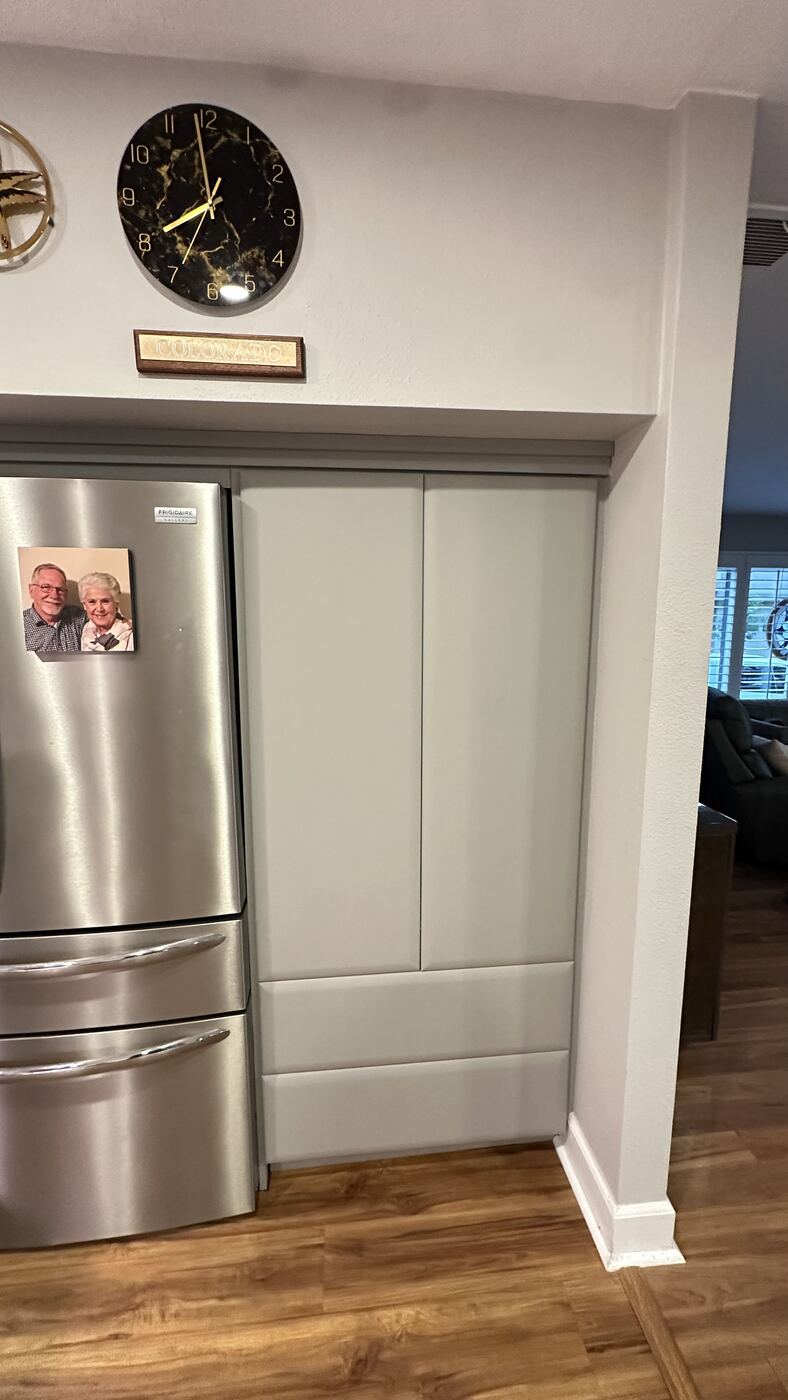
Real Pacific project — wrapped, not painted
Neither option is universally "better" — they trade off differently on cost, durability and finish. Here's the direct comparison.
| Factor | Cabinet Painting | Bodaq® Wrap (Pacific) |
|---|---|---|
| Typical Cost | Lower material cost, labor-intensive to do well | $3,500–$10,000 depending on kitchen size |
| Timeline | 3–7 days, plus dry time between coats | 2–6 days, start to finish |
| Finish Options | Solid colors only | 450+ finishes — wood grain, matte, gloss, stone-look |
| Durability | Prone to chipping and peeling at edges, hinges and handles over time | Built for commercial use; scratch and abrasion tested |
| Visible Brush/Roller Marks | Possible without a sprayer and multiple coats | None — factory-applied film finish |
| Mess & Prep | Sanding, priming, ventilation, drying time | Minimal — cleaned and prepped by our team |
| DIY-Friendly | Yes, with the right tools and patience | Professionally installed |
Professional cabinet painting typically runs somewhere in the $3,000–$7,000 range for an average kitchen, depending on cabinet count, prep work and number of coats. Our architectural film wrap runs $3,500–$10,000 depending on kitchen size — see the full cost breakdown by kitchen size. The ranges overlap; the deciding factor is usually durability and finish, not price alone.
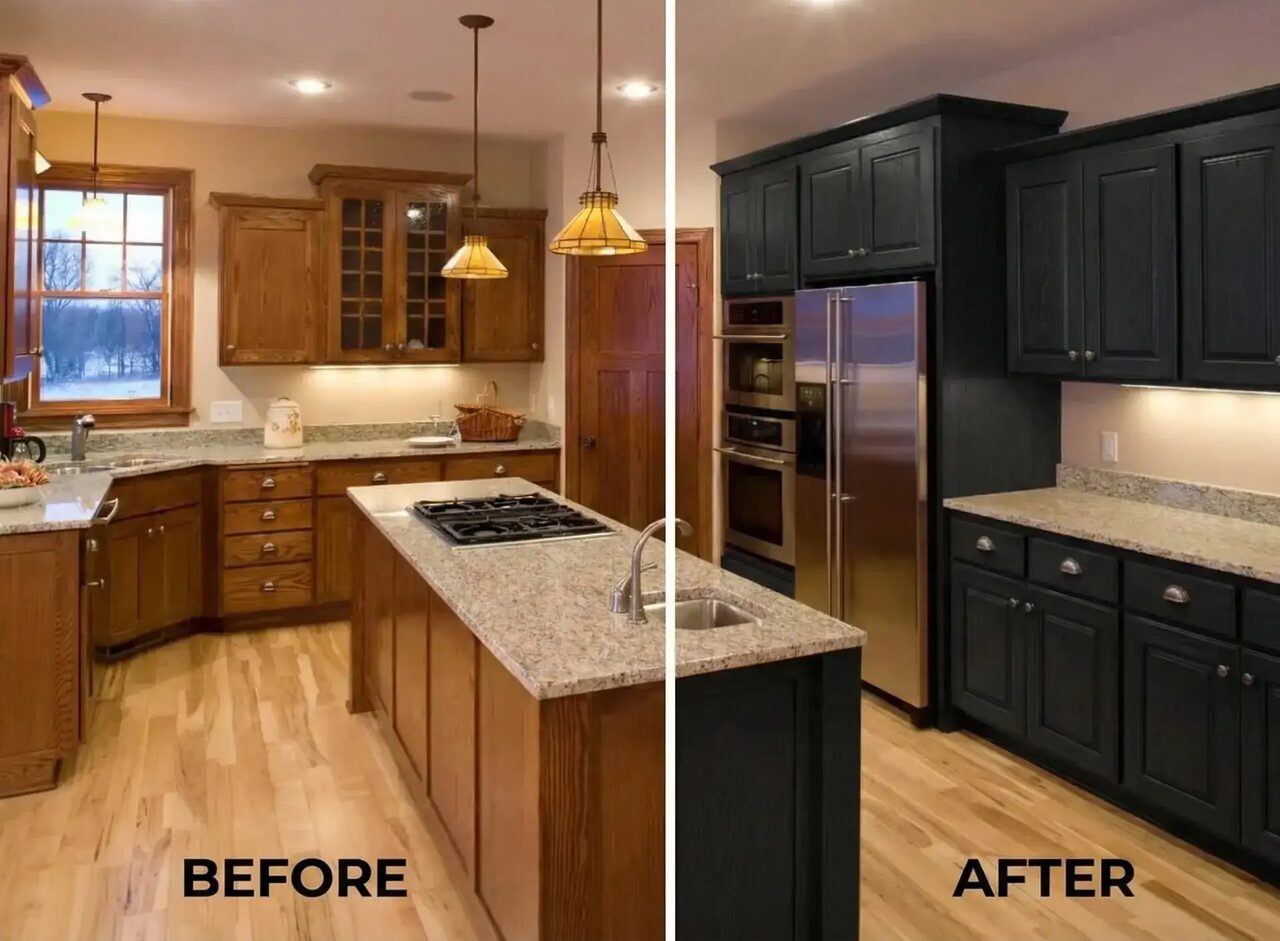
Real wrap example — oak cabinets refinished to a matte dark finish, no paint involved
Cost and finish are visible on day one. Durability is what separates the two options after a year of daily use.
Painted cabinets are exposed to constant contact at hinges, handles and edges — the areas most likely to chip or wear through to bare wood over time, especially without a professional sprayed finish and multiple coats. Architectural film is built for commercial environments and carries scratch and abrasion test documentation — see our durability documentation for the specific reports.
If budget is the only constraint and you're happy with a solid color, painting is a legitimate option — we won't tell you otherwise. If you want a finish that looks and performs like new cabinetry for years, not months, wrapping is the better investment. Most of our clients choose wrapping after comparing the two because the cost difference is smaller than expected once you factor in professional painting labor.
It depends on your priorities. Wrapping generally holds up better to daily wear and offers far more finish options, including real wood-grain. Painting can be a lower-cost, DIY-friendly option for a simple solid-color refresh.
Painted cabinets can chip or wear at high-contact points like hinges, handles and edges, especially without a professionally sprayed finish and multiple coats.
The ranges overlap. Professional cabinet painting typically runs $3,000–$7,000 for an average kitchen; our wrap runs $3,500–$10,000 depending on kitchen size. See our full cost breakdown.
Not realistically. Paint is limited to solid colors. Architectural film offers 450+ finishes including authentic wood-grain, matte, gloss and stone-look textures.
Wrapping is typically done in 2–6 days. Painting can take 3–7 days or more once you account for drying time between coats.
We don't recommend it — paint doesn't adhere reliably to film and isn't necessary, since the film finish is designed to last without repainting.
Send us a few photos of your kitchen and we'll give you an honest recommendation — wrap, paint, or something else — plus a fixed, written price.